BADEF works with poor and marginalised communities across the Somali regions and in neighbouring countries in East Africa: people made vulnerable by prolonged civil war, man made disaster and the mismanagement of resources. Every project is designed around the priority needs of the community it serves.
BADEF works across the Somali regions and in neighbouring countries in East Africa. Where a community names a need and a local committee or partner asks us in, we work there.
Office
OfficeSeven states and territories
Programmes documentedLower Juba
Programmes documentedLower Shabelle
Programmes documentedThe tags mark what this site can evidence: an office, or a programme with published participants, locations and results. Our reach is wider than our published record, and we would rather show you the evidence than claim the same depth everywhere.
Jubaland State
Afmadow · Dhobley
Including the Qorax IDP camp near Dhobley.
Maternal and child health, gender-based violence services, and clinical training for nurses and midwives.
South West State
Marka · Kurtunwarey
Food security and livelihoods, delivered through cash-plus agricultural input distribution to farming households.
Afmadow · Lower Juba
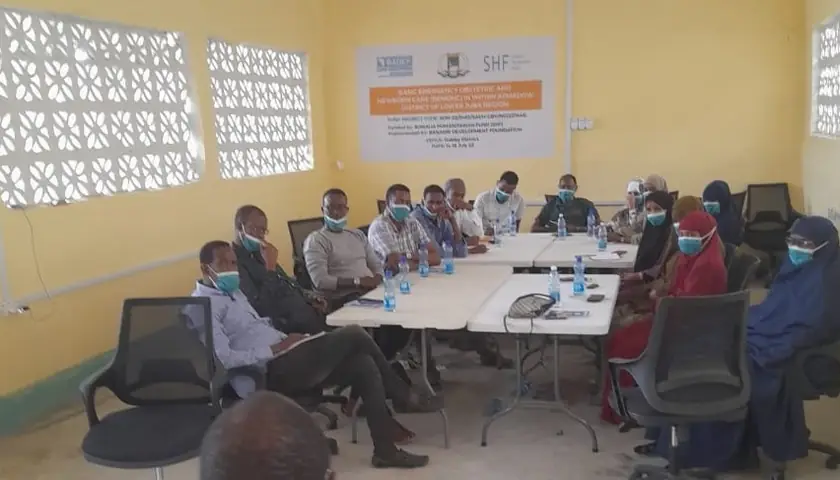
BEmONC training equips nurses and midwives with emergency obstetric and newborn care skills, alongside clinical management of rape services in GBV health centres.
Dhobley · Lower Juba
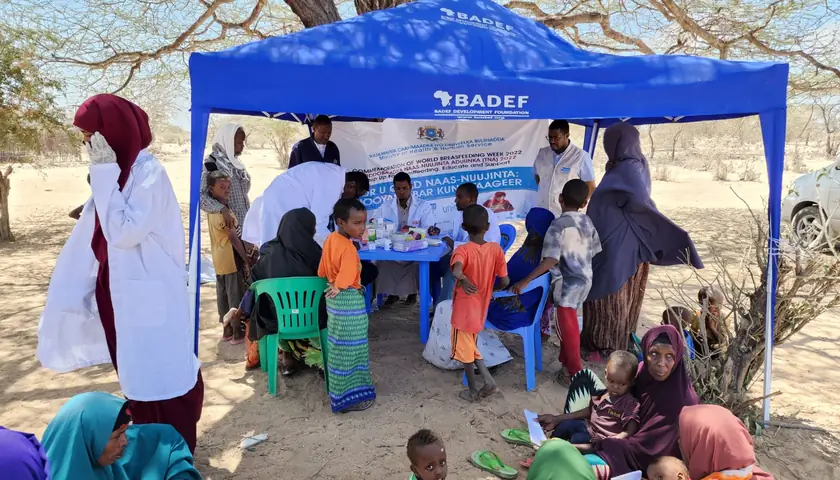
A free mobile clinic serves residents of the Qorax IDP camp, bringing consultations, treatment and maternal care to families far from any fixed facility.
Marka · Lower Shabelle
Cash-plus agricultural input distribution gives farming households both the means to buy food now and the inputs to grow their next harvest. The same programme runs in Kurtunwarey.
Our work is not confined to our field sites. BADEF joins civil society actors and national human rights institutions from across the COMESA region to strengthen protection for children affected by conflict, most recently at a regional convening in Kampala, Uganda, in July and August 2024.
Bringing evidence from Lower Juba and Lower Shabelle into regional forums is how local work turns into policy that outlasts any single project.