
Most of Somalia’s acutely food-insecure people are rural. They make up 60 percent of Somalis facing Crisis and Emergency conditions, and 86 percent of those in Emergency. The food security status of a rural family can deteriorate very quickly, as it did in the first half of 2017, and successive seasons of poor rainfall have meant consecutive poor harvests and significant livestock losses.
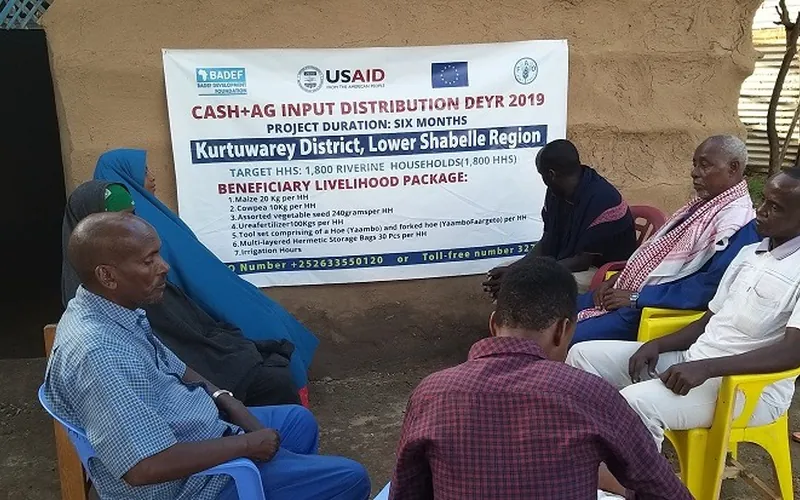
Over six months during the Deyr season, BADEF delivered a combined cash and agricultural input programme to 1,800 riverine households in Kurtunwarey District, Lower Shabelle, with USAID and European Union support.
Each household received a beneficiary livelihood package: 20kg of maize and 10kg of cowpea, 240 grams of assorted vegetable seed, 100kg of urea fertiliser, a tool set comprising a hoe and a forked hoe, thirty multi-layered hermetic storage bags, and irrigation hours.
The composition of that package is the point. Cash covers the immediate gap. Seed, fertiliser, tools and irrigation put the next harvest within reach. The hermetic storage bags protect that harvest from spoilage and pests once it is in. A family given food eats for a week; a family given seed, water and a way to store what it grows is one season away from not needing the transfer at all.
Originally published on badef.org.
‹ All impact stories